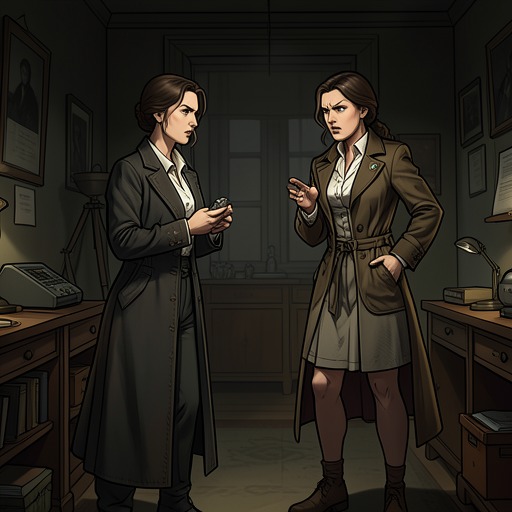
The Yoyogi Park night
The Earthquake BirdThe Yoyogi Park night is a late-night gathering shared by Lucy Fly, Teiji, and Lily Bridges, remembered as a scene of improvised pleasure that acquires an ominous meaning in retrospect. In the park they drink, eat, and sing together; afterward, Lucy secretly photographs Teiji and Lily. That image becomes a possible clue in her own retrospective account of how the night turned consequential, even as she admits that she may be searching for significance where none exists.
The Gathering in the Park
Night has fallen while the three are at a bar. In Yoyogi Park, they sit on plastic bags taken from a convenience store, surround themselves with beer cans, and open packets of rice crackers containing tiny dried fish. The city lights show through the high trees. These ordinary, inexpensive details make the gathering feel improvised rather than ceremonial: a small refuge made out of whatever the friends have brought with them.
Lily begins to sing, and Lucy recognizes a striking difference between Lily’s voice and her habitual speaking manner. Her singing is rich and pure, without the whine Lucy associates with her speech. Lucy’s compliment is genuine. Singing briefly gives Lily a different presence within the group, one that Lucy can admire without qualification.
Teiji says that singing comes from a deep place, from the spirit rather than the lungs. He is drunk enough for his speech to slur, and Lucy observes that she has never heard him sing or express a wish to sing before. Lily asks him to teach her a Japanese song. After closing his eyes for a few seconds, he agrees, presenting it as an easy song known throughout Japan. The three slowly sing Ue o Muite Arukou together. Lily cannot grasp the words, makes loud approximations, and does not attend to Lucy’s attempts to translate them. The song therefore becomes a shared performance without shared understanding: the three voices join, while the words remain unevenly available to them.
The Photograph and Lucy’s Doubt
When they collect their things to walk, Lucy notices that Teiji has left his camera on the ground. She picks it up and hangs it around her neck, intending to return it once he realizes it is missing. The gesture gives her temporary possession of an object she associates with Teiji’s habit of carrying his camera; it also creates the opportunity for a photograph he does not know is being taken.
Walking behind Teiji and Lily, Lucy removes the lens cap, raises the camera, and catches them together in the viewfinder. Her own eyes are harder to focus than the lens, but she manages the shot. The flash does not interrupt their singing or walking, and they appear not to notice. Lucy puts the camera away and chases after them. The urgency she feels about returning it follows the secret act: she has made the image, but quickly resumes the role of someone merely carrying Teiji’s forgotten property.
Looking back, Lucy revises her interpretation of the photograph. She suspects that the Yoyogi Park picture, rather than a photograph taken in a noodle shop, may have been her downfall. But she immediately qualifies that suspicion: perhaps she is superstitious, turning photographs into clues when there are no clues to find. The image consequently remains double-edged in her account. It records Teiji and Lily together, but its importance as evidence of anything beyond that moment is uncertain; the narrator’s hindsight cannot settle whether it was truly a turning point.
The Walk Toward Dawn
The friends leave the park in the early hours and walk uphill toward Teiji’s apartment. Lily repeatedly falls down, says she will sleep on the pavement, and has to be lifted and helped onward. Alcohol has also weakened Teiji’s coordination. He walks into Lucy, and she realizes that she is doing most of the work of keeping the group moving.
Teiji spots a small warehouse dolly at the roadside and motions for Lucy to help. Together they lift Lily onto it and push her up the road. Her head rolls back, her red tuft of hair hangs over the platform, and her limbs fall in different directions; Lucy compares her appearance to a crushed spider. The image is an abrupt counterpoint to the song and food in the park: the night’s companionship now involves handling Lily’s helpless, awkwardly arranged body and hauling it through the nearly dawn-dark street.
The arrangement keeps changing as the walk continues. A few minutes later Lily is walking again and Lucy lies on the dolly; near the top of the street, Lucy is pushing it with Teiji and Lily squeezed together on it. She stops to rest and sees the sun between the buildings as a huge pink ball. They push the dolly into an alley between two shops, wedge it against a wall so it cannot slide, and collapse together on top of it. Lucy’s head is still filled with the voices singing in the park and with the dawn chorus. The scene ends not with a dramatic confrontation but with exhaustion, an improvised resting place, and the arrival of morning.
Retrospective Shadow
The narrator’s later knowledge changes the emotional register of the episode without changing what the three do that night. Lucy observes that she could not have known, amid the cacophony of their voices, how much silence would soon fall over Tokyo, Lily, Teiji, and Lucy. The sentence makes the night’s sounds—singing, movement, and the bustle of a group still together—stand against the later absences. It also makes the gathering feel like a threshold only in retrospect: the participants themselves are not shown recognizing it as one.
The camera and the sound of its mechanism recur in the book’s later atmosphere of uneasy memory. In a later scene, Lucy hears what she identifies as the unmistakable click of a camera followed by the whirr of film advancing; she searches the trees for Teiji, hears the sound seem to echo around the park, and feels rain begin to fall. This later moment does not establish that Teiji is present, or that the sound belongs to the camera from the Yoyogi Park night. Instead, the recurrence links photography with Lucy’s continued expectation of him and with uncertainty about what she hears. The night’s photograph likewise remains suspended between a concrete record of Teiji and Lily walking together and Lucy’s unconfirmed belief that it marked her downfall.
Significance
The gathering’s importance lies in the contrast between its ordinary actions and Lucy’s later effort to read them as signs. Beer, crackers, an imperfectly shared song, a forgotten camera, and a dolly borrowed from the roadside are all specific features of the night; none, by itself, explains what follows. The photograph offers Lucy an image she can return to, but not a definitive account of the relationships it records or of the consequences it may have had.
As a remembered scene, the event also shows how intimacy and distance coexist among the three. They sing together, carry one another through the streets, and reach the same makeshift resting place, yet Lily does not understand the song’s words, and Lucy is already making an image of Teiji and Lily from behind. The narrator preserves both sides of the night: its physical closeness and its limits of knowledge. Its final force comes from that gap between the lively group moving toward dawn and Lucy’s later awareness of the silence that followed.